
Support
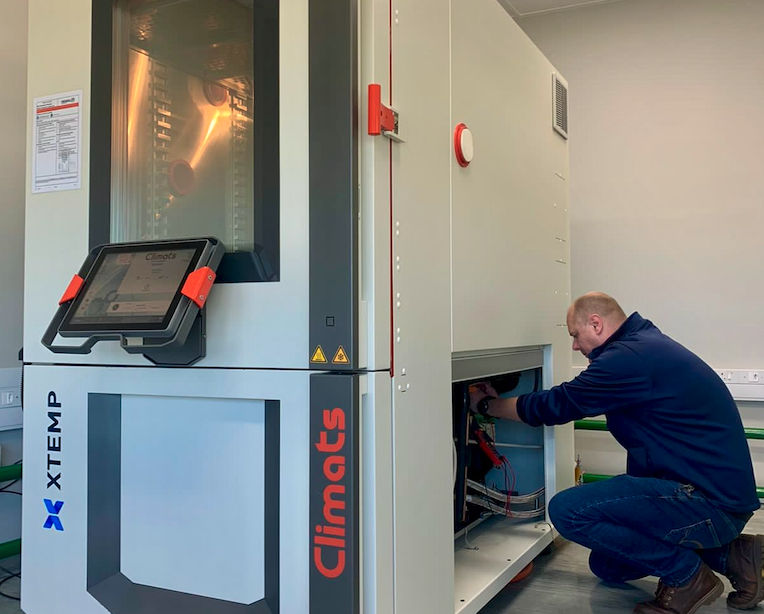
Support, Training and Calibration
XTEMP are committed to quality customer Support, Training and After Sales Services. Which is a primal element of our long-term customer relationships and partnerships. Our experienced team of engineers are always on hand to provide customers with technical support. Whether it is online or over the phone our knowledgeable team will be able to give you accurate technical support.
Support
A test chamber that’s down doesn’t just need a repair — it’s holding up a qualification, a deadline and a decision. That’s why Xtemp treats support as a core part of what we do, not an afterthought. Our technicians service, repair and maintain environmental, climatic, vibration and corrosion test systems across all major makes and brands — not only the equipment we supply — keeping your assets accurate, compliant and running. From rapid breakdown response and genuine spare parts to scheduled preventive maintenance, traceable calibration and performance mapping, we help you avoid unplanned downtime rather than simply react to it. With offices in Cape Town and Pretoria and direct access to factory-backed support from the world’s leading manufacturers, you get a specialist who understands both the chamber and the standard it has to meet — and who picks up the phone when it matters.
Main Activities
Preventive maintenance
Corrective maintenance
Installation
Implementation
Complimentary Activities
Retrofit of Climatic Chamber equipment (refrigerating and computer)
Assessments
Leaks checking
Refrigerant fluids recovery
Spare parts
This offer is topped off with
Technical assistance and technological watch
Advice and training
Technological watch
About XTEMP
Training
At XTEMP we proudly share our knowledge with our partners and understanding the importance of training.
Keep up with industry changes
Be in touch with all the latest technology developments
We recommend good practice supplies, to improve the life of machinery and equipment
Maintain knowledge and skill
Present the latest solutions and facilitate performance-enhancing
We translate advanced topics related to the simulation of environmental conditions and complex analysis of signals help in solving application problems
Calibration
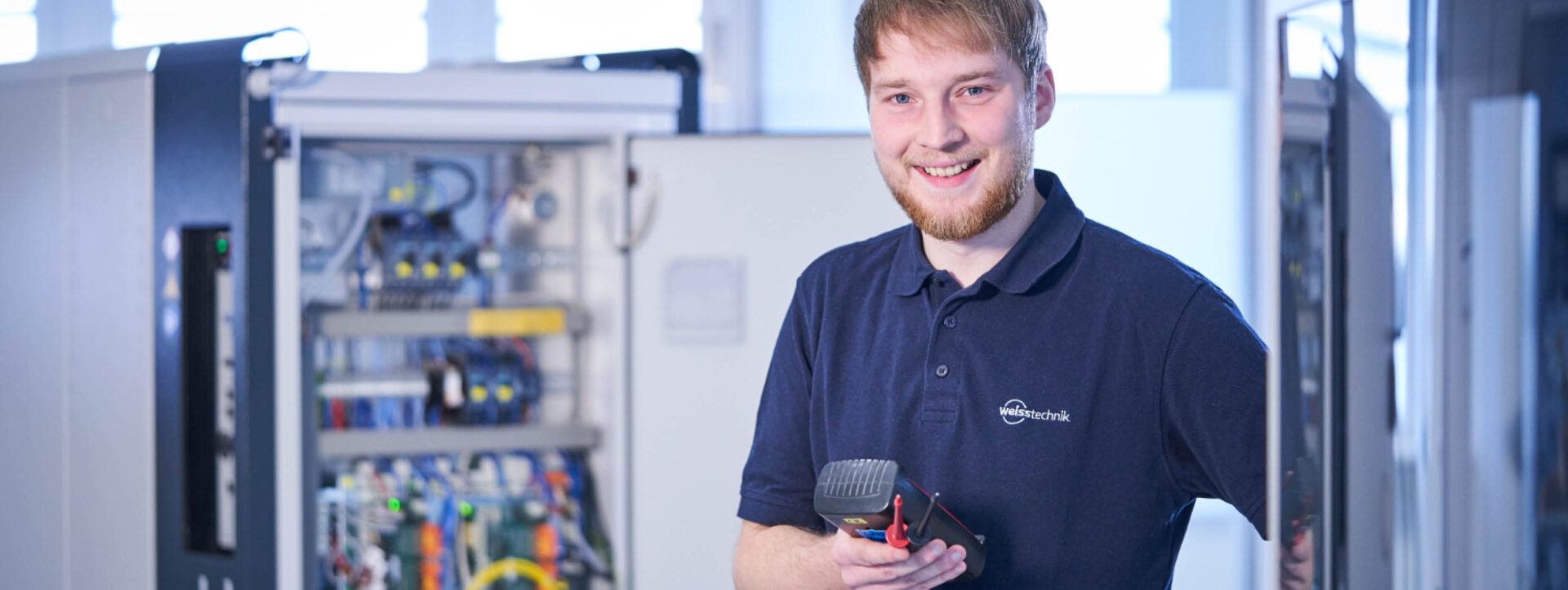
Why Calibration Is Essential — and What It Quietly Protects
A climatic chamber displays 85 °C on its controller. The product inside is being qualified to a specification that demands exactly that. Everyone signs off. But the chamber is actually holding 82 °C — and nobody knows, because the instrument was last calibrated three years ago and has drifted.
That three-degree gap is the difference between a valid qualification and an expensive illusion. It’s also the entire case for calibration in a single sentence: your test data is only ever as trustworthy as the instrument that produced it.
For any laboratory or manufacturer running environmental, vibration or corrosion testing, calibration is not administrative housekeeping. It is the foundation that makes every test result defensible. Here’s why it matters, what it protects, and what happens when it’s neglected.
What calibration actually is — and isn’t
Calibration is the process of comparing the readings of an instrument against a reference standard of known accuracy, and documenting the difference. Crucially, calibration measures error — it tells you how far off your equipment is and whether that’s within acceptable limits. It is not the same as adjustment (correcting the instrument) or verification (a simpler check that it’s “good enough” for a task), although the three are often performed together.
The single most important word in calibration is traceability. A meaningful calibration links your instrument, through an unbroken chain of comparisons, back to national and international measurement standards. In South Africa that chain leads to NMISA, the National Metrology Institute of South Africa, and ultimately to the SI units recognised worldwide. Traceability is what allows a test report from a lab in Cape Town to be trusted by an OEM in Germany or an auditor in the United States. Without it, a measurement is just a number on a screen.
Why it matters more than people assume
Instruments drift. This is not a sign of poor quality — it is physics. Temperature sensors age, humidity probes contaminate, load cells and accelerometers shift with mechanical stress, and electronics wander with use and time. Even the best chamber from the best manufacturer will gradually move out of specification. Calibration is how you catch that drift before it corrupts your results.
The real danger is the failure you can’t see. An uncalibrated chamber that reads warmer than reality will pass products that should have failed — sending under-qualified components into aircraft, vehicles or satellites where the consequences of a field failure are severe. The same drift in the other direction makes you fail products that were actually fine, scrapping good inventory and chasing phantom problems. Both are costly. One is dangerous.
Calibration is the price of compliance
For most of the industries that depend on environmental testing, calibration is not optional — it is written into the standards.
Accredited laboratories operate to ISO/IEC 17025, which requires that all equipment affecting test results be calibrated and traceable; in South Africa, SANAS (the South African National Accreditation System) audits against exactly this. Defence and aerospace qualification under MIL-STD-810H assumes calibrated, traceable instrumentation behind every reported value. Automotive OEM specifications, and pharmaceutical stability testing under ICH guidelines, carry the same expectation. In every one of these frameworks, an out-of-calibration instrument doesn’t just weaken a result — it can invalidate an entire test programme retroactively.
That last point is what keeps quality managers awake. If a chamber is found out of tolerance at its next calibration, every test run since the last good calibration is now in question. Months of data, and the product decisions built on it, can be thrown into doubt at once.
The cost of skipping it
Calibration is cheap relative to what it prevents. Skipping or stretching it invites failed audits and lost accreditation, rejected shipments and broken customer contracts, product recalls, warranty claims, and — in the worst case — safety failures in the field. Add the cost of re-testing once a problem is discovered, the scrapped good product from false failures, and the reputational damage of a qualification that didn’t hold, and the maths is never close. A calibration cycle is one of the highest-return, lowest-cost investments a test facility makes.
Calibration for environmental and dynamic test equipment
Test equipment calibration is more involved than checking a single reading. A climatic or temperature chamber needs multi-point mapping across its working volume to prove temperature and humidity uniformity and stability — because the corner of a chamber rarely behaves like the centre, and the controller sensor only sees one spot. Thermal shock and ESS systems must demonstrate their transition rates. Vibration systems depend on accelerometer calibration and verified control. Corrosion chambers require checks on temperature, spray rate and solution collection. Each discipline has its own method, and each demands someone who understands both the equipment and the standard it serves.
How often, and by whom
There is no universal interval. Calibration frequency should be risk-based — driven by how critical the measurements are, how heavily the equipment is used, the manufacturer’s recommendation, and the requirements of your accreditation or customers. Annual is a common default for environmental chambers, but a heavily used chamber qualifying safety-critical parts may warrant more.
What is not negotiable is who does it. Calibration should be performed against traceable reference standards, ideally by a provider working to ISO/IEC 17025, with a documented certificate stating the measured values, uncertainties and the traceability chain. A sticker on the door is not a calibration.
Calibration is protection
It is easy to see calibration as a recurring cost. It is more accurate to see it as insurance on every decision your test data informs. A calibrated, traceable, well-mapped chamber is the thing that lets you stand behind your results — to your customers, to an auditor, and to yourself.
At Xtemp, keeping test equipment trustworthy is part of how we support the systems we supply. We help our customers keep their chambers, shakers and corrosion systems accurate, traceable and audit-ready — because the qualification is only as good as the instrument behind it. Talk to Xtemp about calibration and service support for your test equipment.
Machine Calibration Can Help to Reduce Costs from Manufacturing Errors
Instrument Calibration Keeps Processes Safe
Calibration Maintenance Certification.